PureCleanPressure Washing
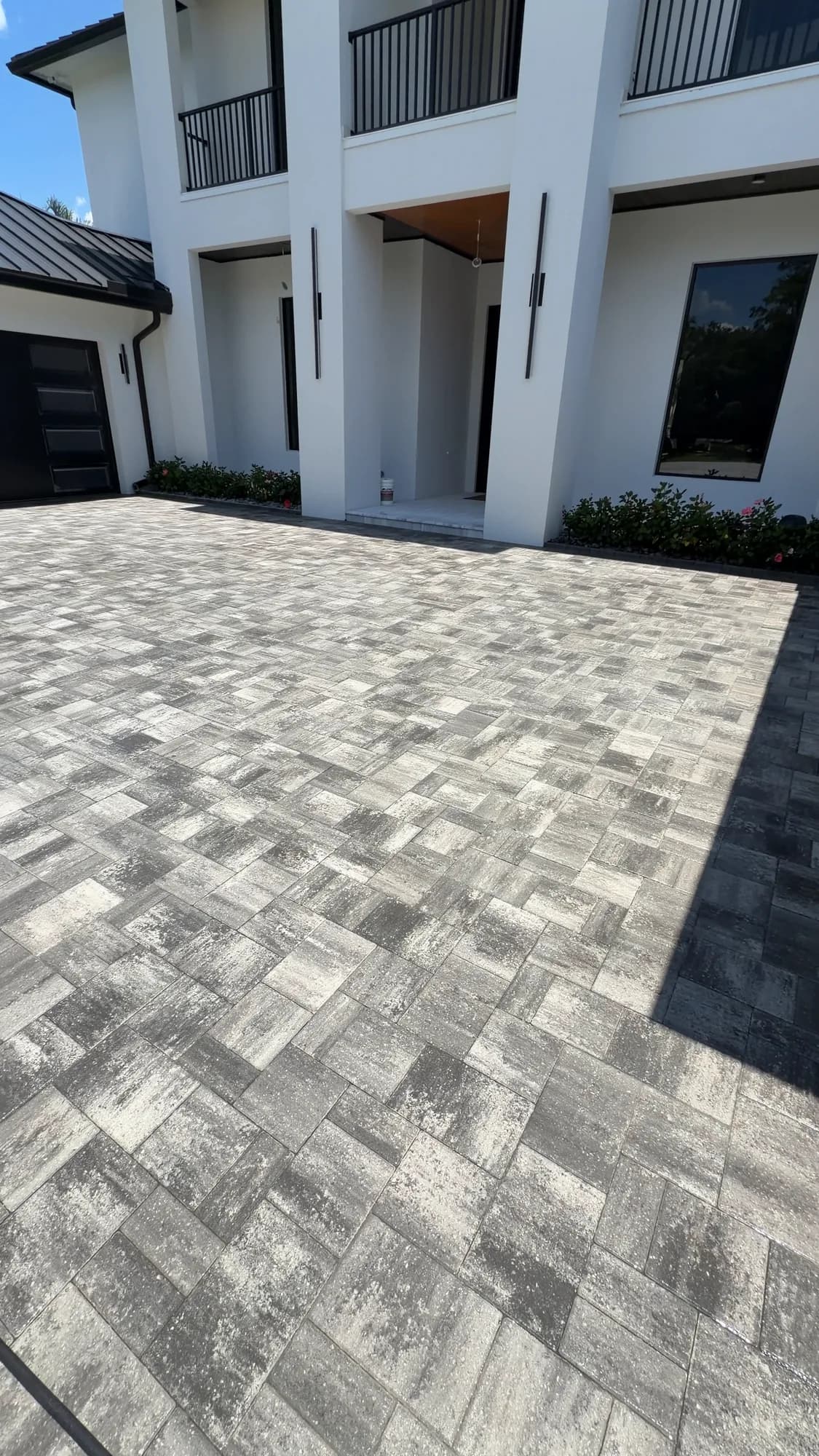
Paver motor court at a Boca Raton estate, cleaned and sealed

Coral Springs, FL

Paver sealingin Coral Springs.

Paver sealing is a three-step job: the pavers are pressure washed, the joints are re-sanded, and a sealer is applied that soaks into the paver and locks the sand. Sealed pavers hold their color in the sun, shed oil and tire marks instead of absorbing them, and stop growing weeds and algae in the joints. Pure Clean seals driveways, pool decks, patios and travertine across Coral Springs and northern Broward.

Updated September 2026

Clean, re-sand, sealFree estimateFully insuredOwner-operated
Surfaces
Concrete pavers, travertine, brick, natural stone
Method
Pressure wash, polymeric re-sand, penetrating sealer
Typical time
Two visits: clean and dry, then sand and seal
Cure before cars
24 to 48 hours
Lasts
3 to 5 years
Finish
Natural or wet look, your choice on a test patch

Unsealed pavers in South Florida fade in about three summers. The sun bleaches the pigment, the rain washes the joint sand out, and every gap that opens fills with algae, weeds and ants. Then the tire marks and the sprinkler rust soak straight into the surface because there is nothing on it to stop them.

Sealing fixes all of that at once, but only if the pavers are actually clean and the joints are actually full before the sealer goes down. Sealer over dirty pavers locks the dirt in. Sealer over empty joints does nothing. That is why this job is always clean, sand, then seal, in that order, with drying time between.

Signs you need it

  • The pavers have faded to a lighter version of their color
  • Weeds or ants in the joints
  • Sand washing out after every rain
  • Tire marks and oil that will not wash off
  • Old sealer peeling or turning white
Paver motor court at a Boca Raton estate, cleaned and sealed

Local conditions

Pavers, travertine and the Florida sun

Coral Springs driveways, pool decks and lanais are mostly concrete pavers, with travertine on the newer and higher-end homes. Concrete pavers are pigmented on the surface, so once the top wears, the color is gone. Travertine is a natural stone that is porous enough to stain from a single wet planter. Both want a penetrating sealer that goes into the material, not a film that sits on top and peels in the heat.

The joint sand is half the job. Polymeric sand, once it is wet and sets, hardens between the pavers and stops the joints washing out and the weeds coming up. On a pool deck it also stops the sand tracking into the pool.

The method

How pavers get sealed

Day one is the clean: surface cleaner on the pavers, the old failing sealer or efflorescence treated if there is any, rust and oil handled, joints blown out, and the whole surface left to dry. Day two the joints are filled with polymeric sand, compacted, the sand is activated and set, and then the sealer is applied in even coats. The surface is off limits to cars for a day or two after.

The finish is your choice: a natural look that just deepens the color a shade, or a wet look that makes the pavers look like it just rained. Michael will show you both on your own pavers before he commits to one.

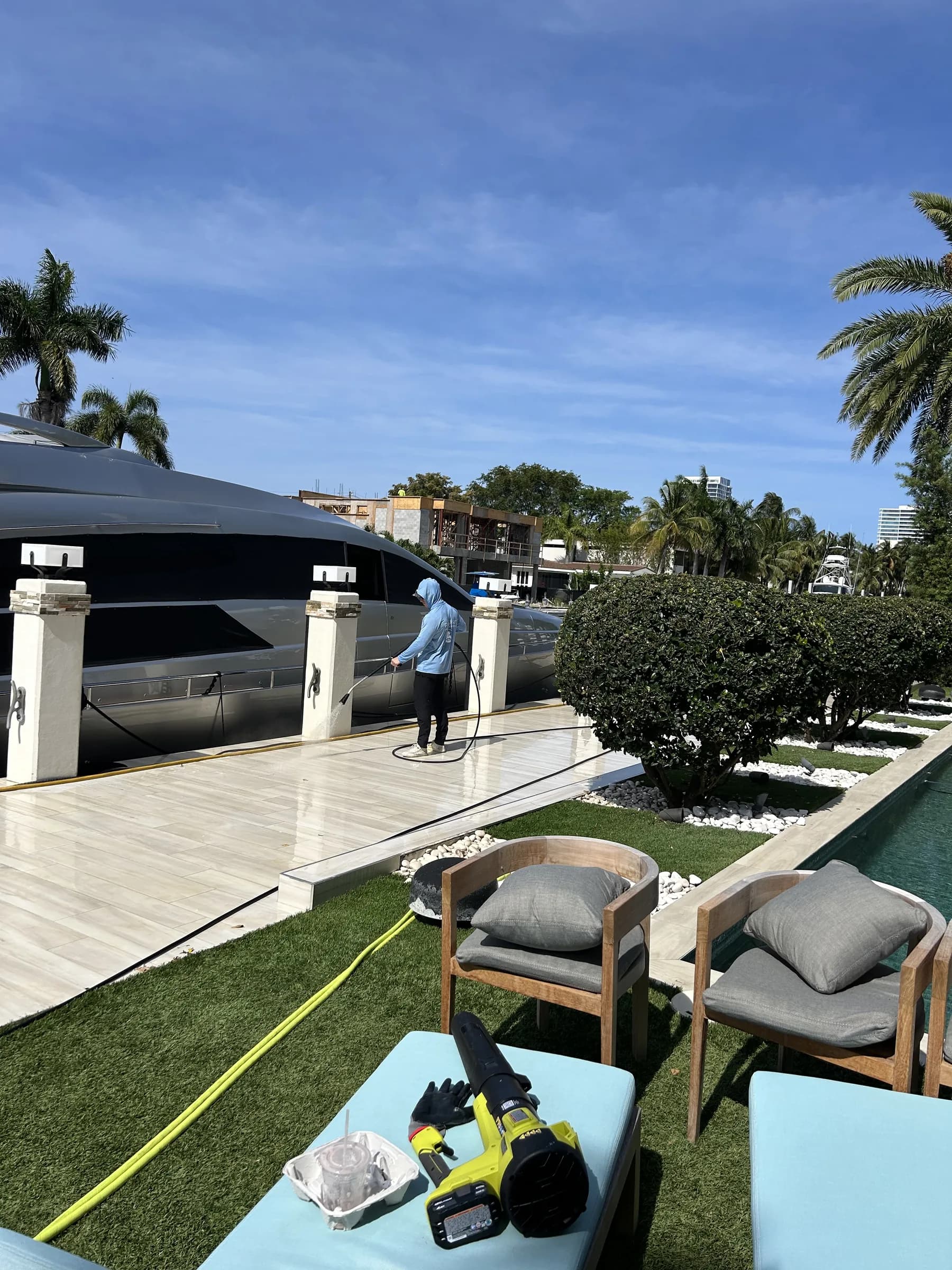
Sealed travertine pool deck and driveway at a Boca Raton estate

What’s included

  • Full pressure wash of the pavers, including rust and oil treatment
  • Old failing sealer or efflorescence treated where present
  • Joints blown out and refilled with polymeric sand
  • Sand compacted and activated
  • Sealer applied in even coats, natural or wet look
  • Edges and borders finished by hand

Not this job

  • Replacing broken or sunken pavers
  • Re-leveling a driveway that has settled

Worth knowing

Paver sealing in Coral Springs, in detail.

Why sealer over dirty pavers is a waste of money

Sealer is a lock. Whatever is on and in the paver when it goes down is what you are keeping. Seal over algae and it grows under the sealer, where you cannot get to it. Seal over efflorescence, the white haze that leaches out of new pavers, and you lock in the haze. Seal over sprinkler rust and it is rust for the next five years. That is why the wash is the longest part of the job and why there is a drying day between the wash and the seal.

It is also why Michael will tell you if the pavers are not ready. New pavers still throwing efflorescence, or a driveway with a failing old sealer that has to be stripped, get that handled first, even if it means the seal happens later than you wanted.
Polymeric sand: what it does and why the joints matter

Pavers are a floating system. The sand in the joints is what locks them to each other so they do not rock, shift or sink at the edges. In Florida the rain washes ordinary sand out in a season, the joints open up, and weeds, ants and algae move in. Polymeric sand has a binder mixed in. Once it is swept in, compacted and activated with water, it sets firm, sheds water and stays put.

The sealer on top is what keeps it that way. Sealer soaks into the sand as well as the paver and hardens the joint further. Sealing without re-sanding empty joints does nothing for the joints, which is why Michael checks them before he quotes and includes sand when they need it.

Wet look vs. natural finish

Both are the same protection. The difference is what the pavers look like when they are dry. A natural finish soaks in and deepens the color a shade, so the driveway looks like clean pavers on a slightly overcast day. A wet look adds gloss and makes the color rich and dark, like the pavers just got rained on. Wet look is the more dramatic choice on a grey or tan driveway; natural is the safer one on travertine and on pool decks where glare matters.

You do not have to decide from a brochure. Michael puts both on a test patch on your own pavers, in your own light, and you pick. Wet-look film sealers show wear sooner on driveways with daily traffic, which is part of the conversation.

Travertine and natural stone

Travertine is the stone on the higher-end driveways and pool decks in Coral Springs and Boca. It is beautiful, it stays cool underfoot, and it is porous enough to stain from a wet planter left in one spot. It wants a sealer made for natural stone, usually a natural finish so the stone still reads as stone, and a lot of care at the joints because the edges chip more easily than a concrete paver.

Sealed travertine sheds the rust ring from a chair leg and the tannin from a fallen leaf instead of drinking them. If your travertine is already stained, most of it comes out in the wash with the right treatment, and Michael will tell you what will and will not before he seals.

How it goes

Four steps, one guy.

  1. 01

    Look at the pavers

    Michael checks for old sealer, efflorescence, sunken or broken pavers and the joint condition, then quotes the whole job including the sand.

  2. 02

    Clean

    Surface cleaner across the pavers, rust and oil treated, old sealer stripped where it is failing, joints blown out. Then it dries.

  3. 03

    Re-sand

    Polymeric sand swept into the joints, compacted, activated with water and left to set.

  4. 04

    Seal and walk it

    Sealer applied in even coats. You pick natural or wet look on a test patch first. Then you walk it and the pavers stay car-free while they cure.

On the job

Paver sealing, on camera.

All the work
  • Paver driveway beside a modern white home
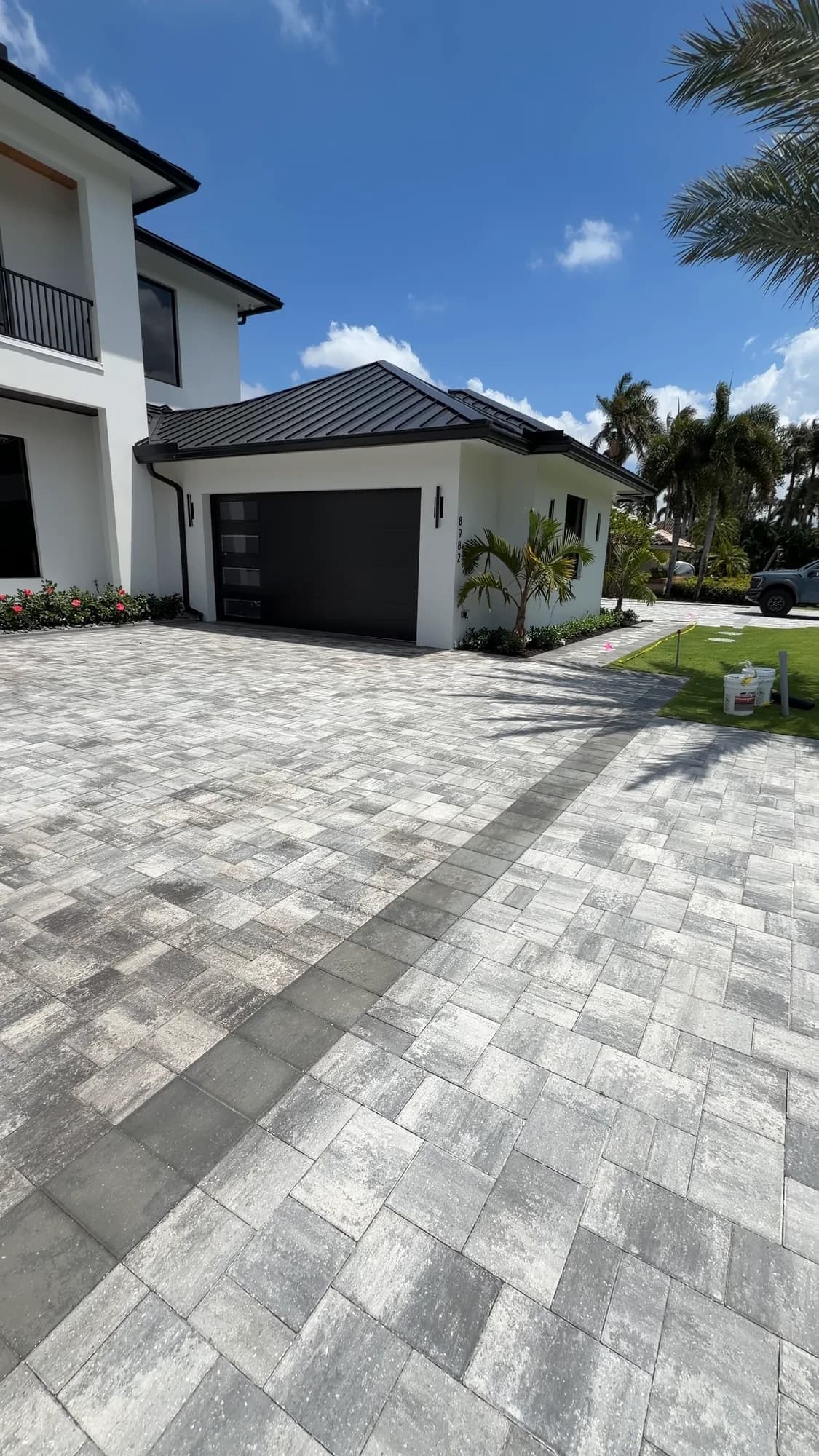
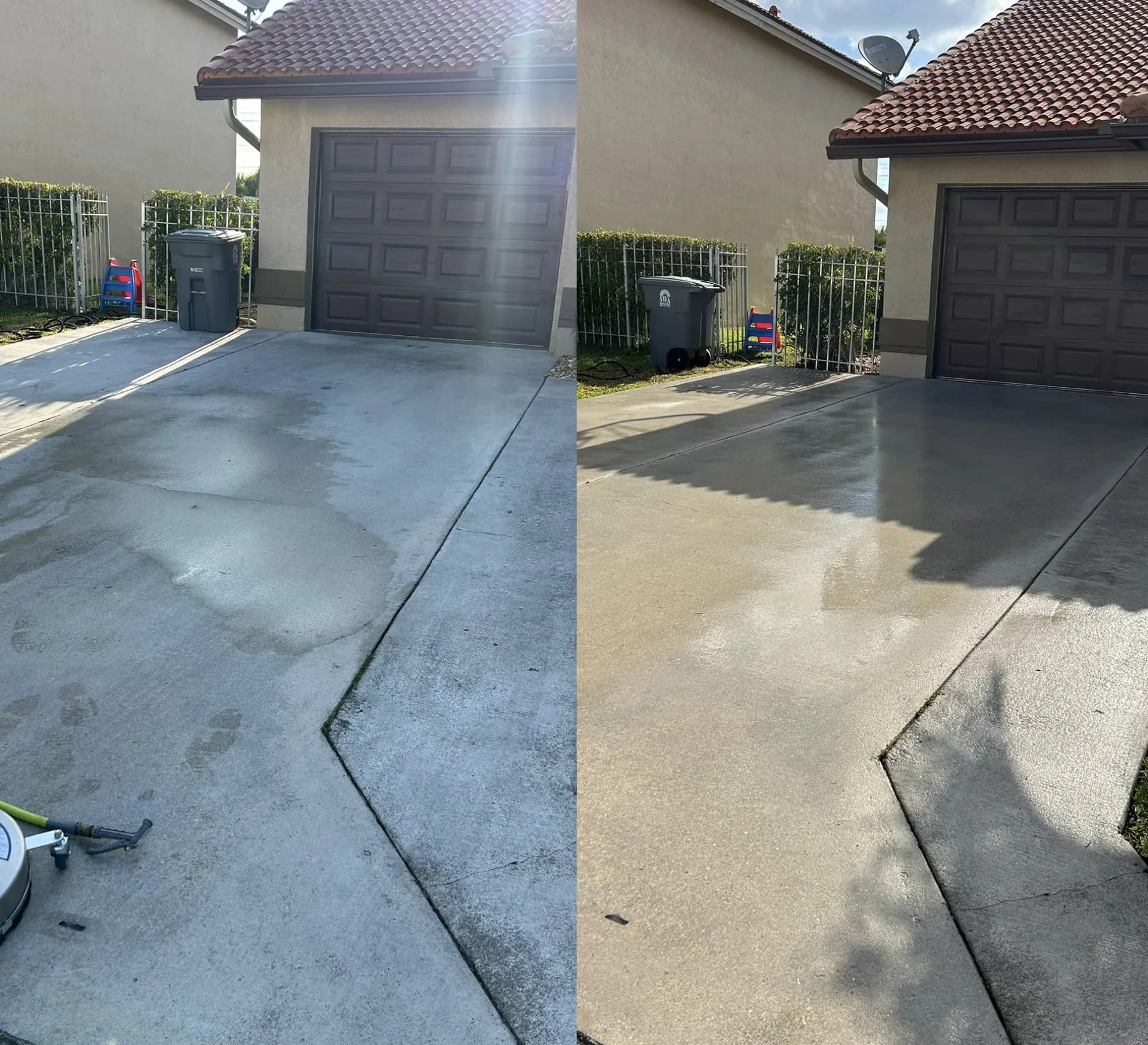
  • Paver driveway before and after cleaning

What sets the price

How much does paver sealing cost in Coral Springs?

Sealer and sand are bought by the square foot, so size is the first number. Then the condition of the joints, because empty joints take a lot of sand; whether there is old sealer that has to be stripped first; and whether it is concrete pavers or travertine, which wants a different product. The wash, the sand, the sealer and the two visits are all one number.

Photos of the pavers from standing height and a close-up of a joint tell Michael most of what he needs. Text them to (954) 507-7249 and say roughly how big the area is.

  • Square footage

    Sealer and sand are bought by the square foot, so this is the biggest factor. A pool deck plus a driveway is priced as one job with one setup.

  • Condition of the joints

    Joints that are mostly empty take a lot more sand and time than joints that just need topping up.

  • Old sealer

    If the pavers were sealed before and it is peeling or hazy, it has to be stripped first. That is a day on its own.

  • Paver or travertine

    Travertine wants a different sealer and more care at the joints. It is worth doing right because it is expensive to replace.

Questions

Paver sealing questions.

How long does paver sealer last in Florida?

A good penetrating sealer lasts three to five years here. Wet-look film sealers show wear sooner in full sun and on driveways with daily traffic. Michael will tell you which he recommends for your surface and how long to expect from it.

Do you have to re-sand? Can you just seal?

If the joints are full and firm, sometimes. If they are washed out, sealing without sanding is a waste of money, because the sealer is what locks the sand and there is no sand to lock. Michael checks the joints before quoting and only includes sand if it is needed.

How long before I can park on it?

Usually 24 to 48 hours for cars, less for foot traffic. Heat and humidity change it. Michael will give you a time when the sealer goes down.

Wet look or natural?

Natural deepens the color slightly and looks like clean pavers. Wet look makes them glossy and darker, like they just got rained on. Both protect the same way. You see both on a test patch before the job and choose.

Can you seal travertine?

Yes. Travertine is porous and stains easily, so sealing it is worth more than sealing concrete pavers. It gets a sealer meant for natural stone and the joints are handled carefully because the stone chips easier than a paver.

Where

Paver sealing across Coral Springs and northern Broward.

Paver and travertine driveways run all the way down the newer streets of Coral Springs, especially Heron Bay, Eagle Trace, Wyndham Lakes and the homes off Coral Ridge Drive, and into Parkland and Boca Raton where nearly every driveway is pavers.

Coral Springs neighborhoods

  • Eagle Trace
  • Heron Bay
  • Wyndham Lakes
  • Ramblewood
  • Cypress Run
  • The Hills
  • Kensington
  • Turtle Run
  • Whispering Woods
  • Maplewood
  • Westchester
  • Pine Ridge
  • Shadow Wood
  • Coral Springs Country Club
  • Forest Hills
  • Brookside

Also serving

What customers say

Word for word, from Google.

Every review on this site is pasted exactly as the customer wrote it. Nothing trimmed, nothing invented.

★★★★★

“Michael Blockhus is a very professional and hard working individual. He helped me find the solution to my problem and did a wonderful job. Pure Clean Pressure Washing was quick, reliable, and very clean. Would recommend this service to anyone!”

Drew BennettGoogle
  • ★★★★★

    “Amazing service! Michael was very attentive, and my driveway, windows, and even roof were super clean! I highly recommend it.”

    Herbert BurnsGoogle
  • ★★★★★

    “The crew at pure clean was super professional and I was impressed with how everything turned out. Would definitely have them back to do more!”

    Sydney VivantGoogle
  • ★★★★★

    “Michael Blockhus of Pure Clean Pressure Washing did an excellent job on our home, deck, sidewalks and driveway. Every corner was superbly cleaned and Michael was very professional! My wife and I would HIGHLY recommend his services!”

    Gary LynchGoogle

Free estimate

Get a number for your pavers.

Send a few details and Michael gets back to you during business hours, 9am to 5pm.

Or just call

(954) 507-7249

Often done the same day

  • Driveway cleaning

    Concrete and paver driveways run with a surface cleaner, then post-treated so the black stays gone.

  • Soft washing

    Low pressure and the right detergent for stucco, siding and painted surfaces. The algae dies, the finish stays.

What needs cleaning
Where

Or call (954) 507-7249.

Call Get a quote